Exercise and fertility: how to move without adding more pressure
Exercise is often discussed as if there were one ideal fertility routine. There is not. Movement supports general health, while the right type, volume and intensity depend on your baseline, medical history, energy and preferences.
Begin with your own baseline
Start from the movement you already do, then build gradually in a way that suits your energy, health and experience. A balanced week might include walking, mobility, strength work and activities you genuinely enjoy, with enough recovery between sessions.
Moderate does not mean meaningless
A brisk walk, cycling, swimming, mobility work or strength training can all count. Moderate movement usually raises breathing and heart rate while still allowing you to talk. Some activity is better than none.
Let feedback guide the plan
- Notice energy, mood and recovery after sessions.
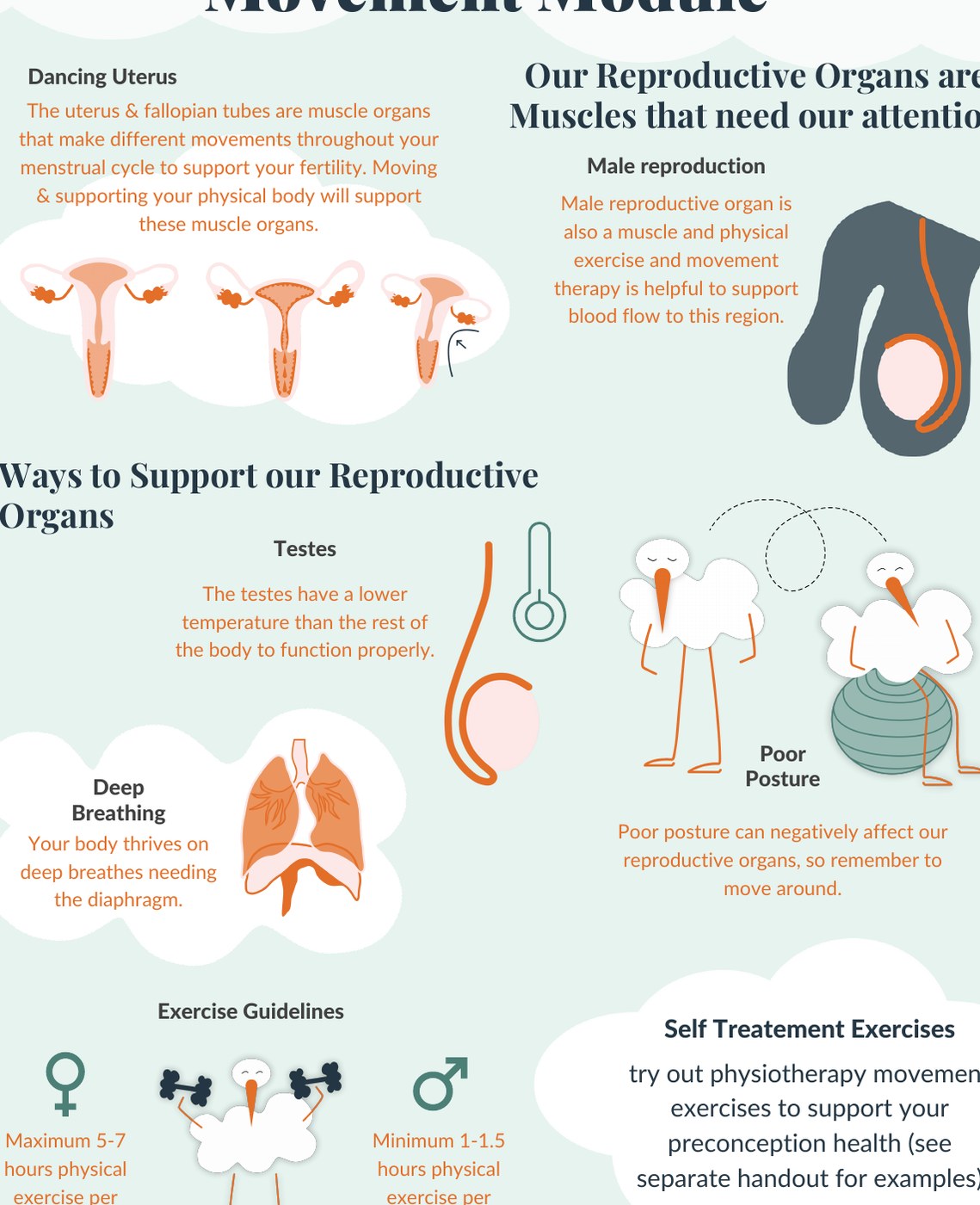
- Include strength, mobility and everyday walking rather than relying on one mode.
- Reduce long periods of sitting where practical.
- Adapt rather than push through persistent pain, exhaustion or concerning cycle changes.
- Ask your GP or a qualified professional for individual guidance if you have a condition or are returning after a long break.
Movement belongs in real life. The best routine is not the hardest one—it is one your body can recover from and you can sustain.