Sleep and fertility: a gentle daily routine for better rest

Sleep is an important part of general health, energy and emotional wellbeing while preparing for pregnancy. Research into sleep and reproductive outcomes continues, so it is more accurate to support good sleep for overall wellbeing than to promise it will improve fertility.
Morning: anchor the day
Wake at a reasonably consistent time and seek daylight early when possible. A repeated wake time is one of the clearest cues for the body clock—even after a disrupted night.
Daytime: build sleep pressure gently
- Move regularly in a way that suits your health and energy.
- Notice whether caffeine later in the day affects your sleep.
- Make brief pauses for recovery rather than saving all relaxation for bedtime.
- Avoid using alcohol as a sleep aid; it can contribute to disrupted sleep.
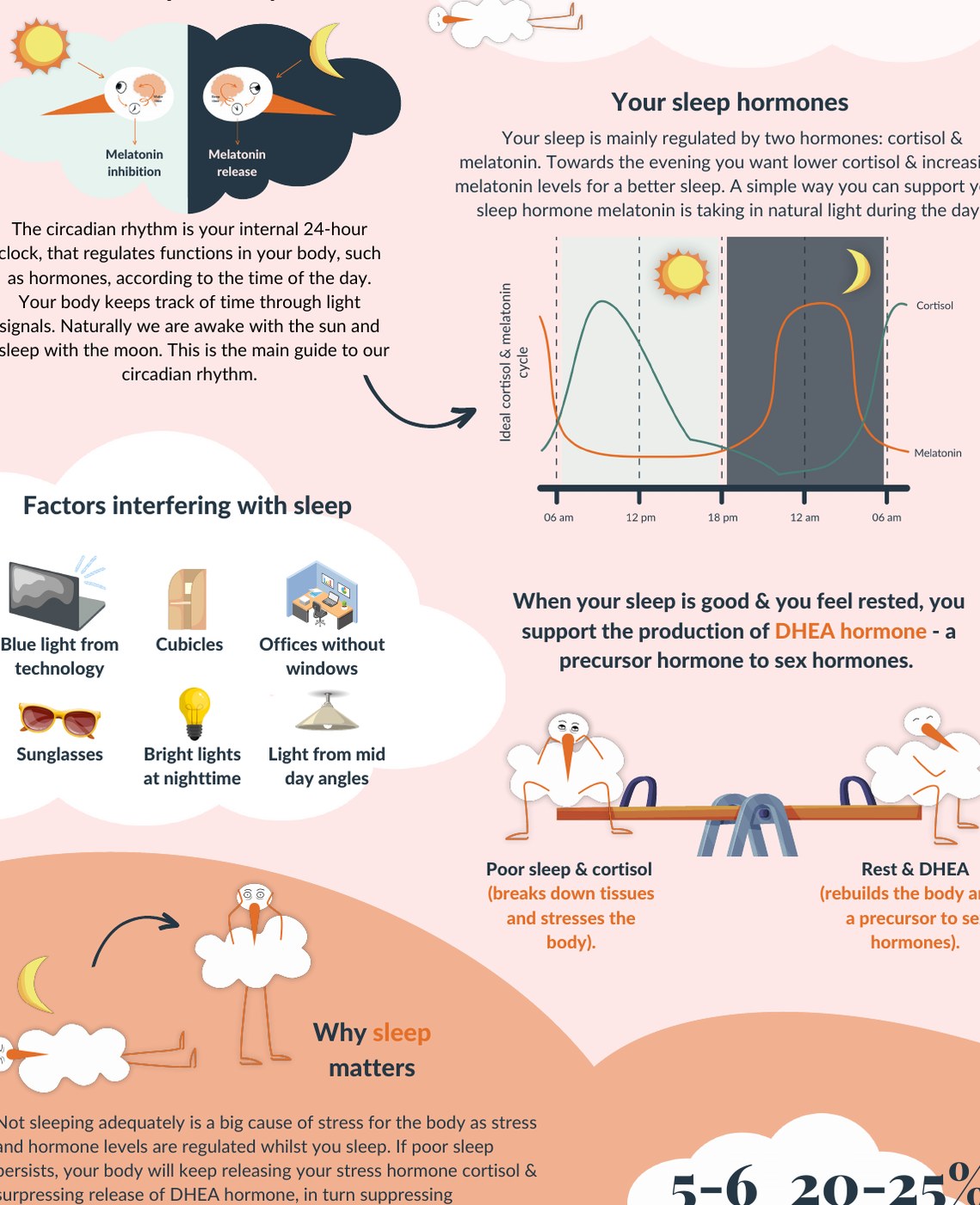
Evening: create a repeatable landing
Choose a short sequence you can repeat: lower stimulation, put work away, dim screens or stop using them, and do something quiet. Consistency matters more than turning your evening into another wellness performance.
When sleep needs more than a routine
Speak to your GP if sleep problems persist, affect daily life, or may relate to another condition. Sleep apnoea, restless legs, anxiety and other concerns deserve individual assessment.
A helpful sleep routine should reduce pressure—not make you anxious about doing sleep ‘correctly’.