The truth about stress and its impact on fertility

Have you ever been told, ‘Just relax, and it will happen’? The advice may be well intentioned, but it can leave someone feeling misunderstood and responsible for circumstances they cannot simply think away.
Understanding the stress response
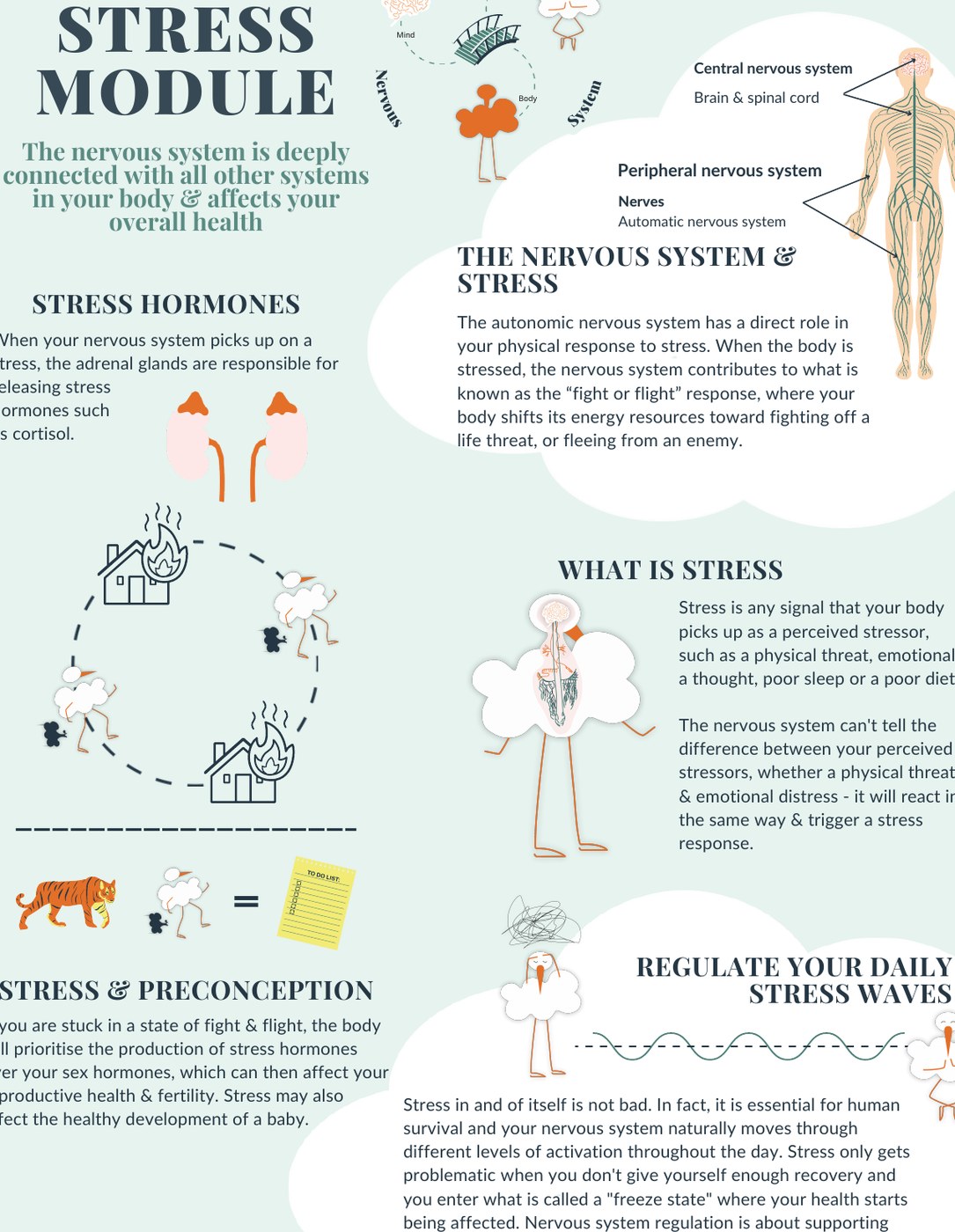
Stress is the body's natural response to a challenge. Activation can sharpen energy and attention in the short term. Difficulty arises when pressure is prolonged and opportunities to return to a restful state become rare.
In simple words: your nervous system has an accelerator (‘fight or flight’) and a brake (‘rest and digest’). Both are healthy. Trouble starts when the accelerator stays pressed all day and the brake rarely gets used—so the practical goal is to give your body more moments to brake.
Recovery, not perfection
The relationship between stress and fertility is complex and individual. Supporting recovery may benefit overall wellbeing, but stress is not a personal failure and relaxation is not a fertility guarantee.
Inside Module 5, our conversation with Louise Tjernqvist explores stress, the nervous system and practices that help us recover—even when it feels impossible to simply ‘stress less’.
Creating small moments of return
- Pause for a slower, longer exhale.
- Choose gentle movement or time outdoors when it feels restorative.
- Make room for pleasure without turning it into another task.
- Talk with your partner about pressure instead of carrying it privately.
- Ask for professional support when stress or anxiety feels persistent or difficult to manage.
The goal is not a stress-free life. It is a greater capacity to move between activation and recovery.