A lower-toxin home before pregnancy: small changes that make a difference

When Ingrid and I began our preconception journey, reducing our exposure to potentially harmful chemicals was one of the areas we knew the least about.
And honestly, what we discovered was pretty overwhelming. Suddenly, we were questioning everything: our cleaning products, cosmetics, food containers, furniture and even the air we were breathing.
Was it even possible to live a toxin-free life?
What started as a rather intimidating subject eventually became one of the most enjoyable parts of our journey towards more conscious living.
We discovered wonderful small businesses making thoughtful products, started experimenting with homemade cleaning solutions and skincare, and realised how surprisingly little we actually needed. These days, we make many of our own household products, often using just a handful of simple ingredients.
It wasn't about creating a perfectly toxin-free home. It was about simplifying our lives and making more intentional choices.
And the good news? You don't need to change everything to begin.
1. Understand what you're trying to reduce
We're exposed to countless substances through our environment, food, water and everyday products.
Some chemicals, known as endocrine disruptors, can interfere with the body's hormonal signalling. Examples include certain bisphenols, phthalates and pesticides.
Because hormones play such an important role in reproduction and early development, reducing avoidable exposure to substances of concern is particularly relevant during preconception.
But there's no need to become fearful of everything around us.
The goal is to reduce unnecessary exposure, not eliminate every chemical from our lives.
2. Start where you spend the most time
Instead of overhauling your entire home, begin with a few simple changes.
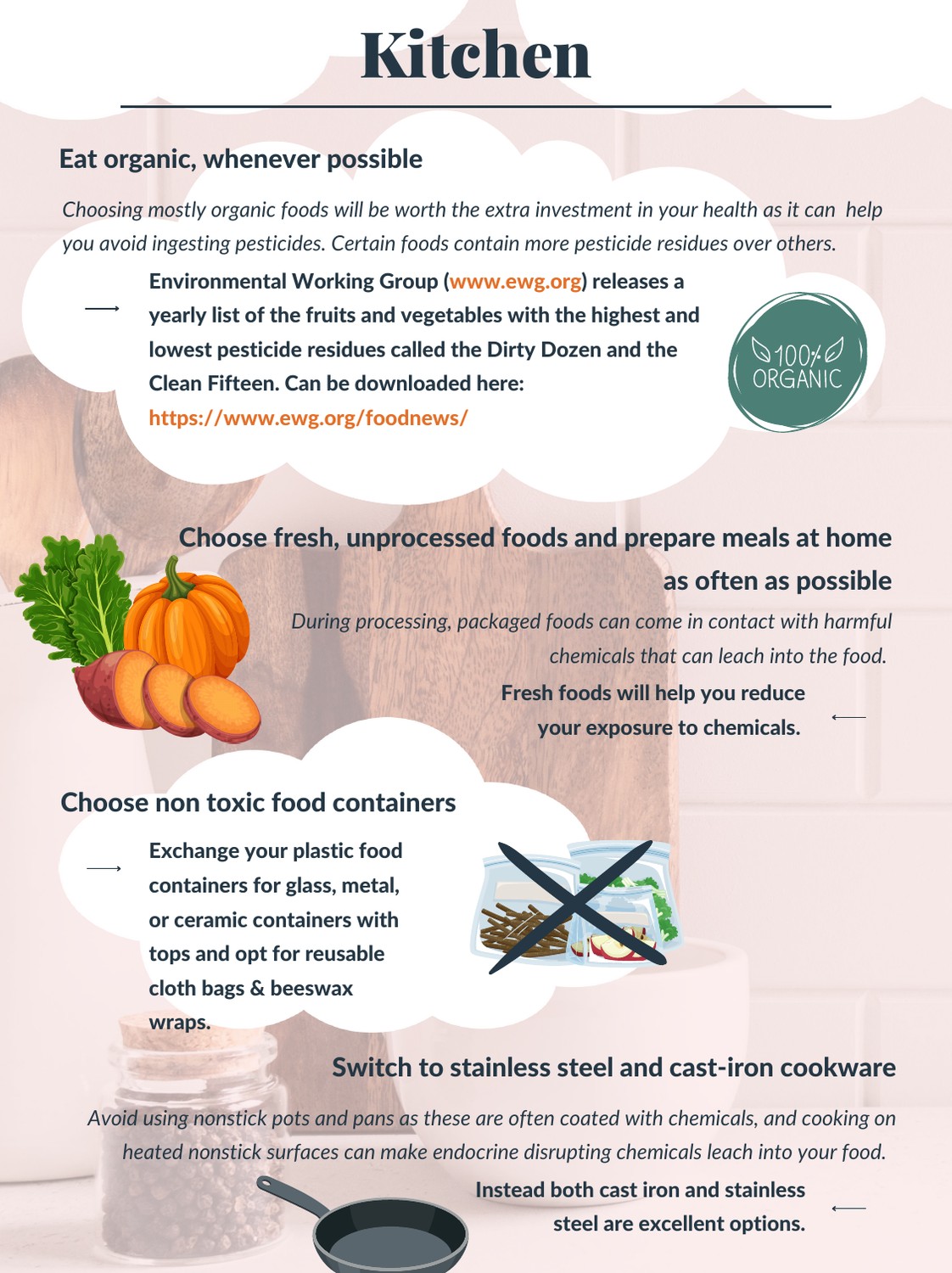
In the kitchen, avoid heating food in plastic containers, especially those not designed for high temperatures. Use glass or stainless steel for food storage when practical, and replace damaged non-stick cookware when needed.
In the bathroom, simplify your skincare routine. You may need fewer products than you think. Consider reducing heavily fragranced products, and explore thoughtfully formulated products from small, local makers.
For cleaning, try simple, effective alternatives for everyday cleaning. Ventilate regularly and reduce indoor dust, and choose fragrance-free products when possible.
We've found that a few versatile products can go surprisingly far. And making some things ourselves has become a genuinely enjoyable part of everyday life.
Just remember that homemade doesn't automatically mean safer: always use suitable ingredients, avoid mixing cleaning chemicals and follow safe preparation and storage practices.
Something to try: Choose one room and identify two products you could simplify or replace when they run out. There's no need to throw away everything you already own.
3. Support your body's natural detoxification pathways
Reducing exposure is only one part of the picture.
Our bodies already have remarkable systems for processing and eliminating substances, particularly through the liver, kidneys and digestive system.
Rather than turning immediately to restrictive detox programmes or expensive cleanses, we can support these natural processes through everyday nourishment.
- Eat a diversity of colourful foods. Vegetables, berries, herbs and other plant foods provide phytonutrients involved in various protective and metabolic processes.
- Prioritise adequate protein. Amino acids are needed to produce enzymes and other compounds involved in normal liver metabolism.
- Support digestive health. Fibre, hydration and regular bowel movements are part of healthy digestive function.
- Move and rest regularly. Physical activity and restorative sleep support the body's overall health and normal functioning.
The best detox isn't a cleanse. It's consistently giving your body what it needs to do its job.
4. Think beyond the products in your home
One thing our preconception journey taught us was to think about our environment more broadly.
Not just what we put on our skin or use to clean the kitchen, but also what we surround ourselves with every day.
The relationships we nurture, the information we consume, the pace we live at and the activities we make time for all influence how we feel.
Of course, these aren't chemical toxins in the scientific sense. But our emotional environment deserves care too.
For us, conscious preparation also meant asking: What brings us energy? What drains us? And what would we love to make more room for in our lives?
Sometimes creating a healthier environment means changing a cleaning product. Other times, it's spending more time outdoors, setting boundaries or making space for the people and activities that nourish us.
Small changes, a lighter way of living
Looking back, I'm grateful that we explored this part of preconception, even though it initially felt overwhelming.
It encouraged us to question our habits, discover new ways of doing things and appreciate how much we could simplify.
And it's something we continue to return to, again and again. Not just when it comes to the products in our home, but in life more broadly.
What are we ready to let go of? What no longer feels aligned with who we're becoming? And what would we love to make more space for?
We certainly don't live in a 100% toxin-free home. In today's world, that's nearly impossible. But we keep reminding ourselves that perfection isn't the goal.
For us, it's about living with greater awareness, making thoughtful choices and enjoying the process along the way.
In the Storka Preconception Wellness Programme, we explore environmental exposures in greater depth, with practical room-by-room guidance to help you make changes that feel realistic for your own life.